Percutaneous Discectomy And Annuloplasty
Home Procedures Offered Advanced Procedures Percutaneous Discectomy And Annuloplasty
Percutaneous Discectomy And Annuloplasty
These are advanced disc decompression techniques that relieve nerve pressure, reduce pain, and strengthen the disc wall through minimally invasive spine surgery with faster recovery.
Share this page:
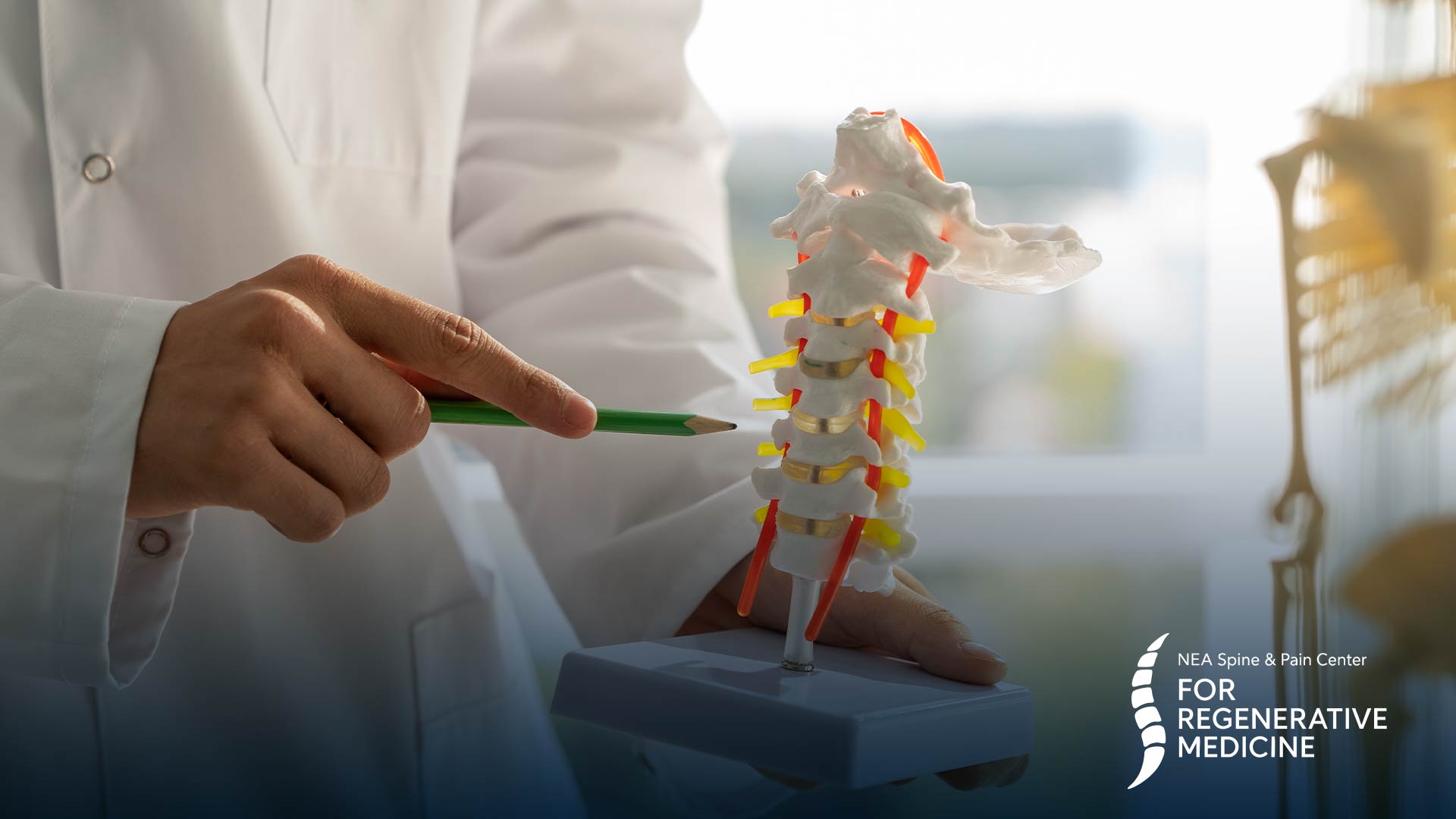
Spinal disc herniation is a common cause of lower back and leg pain, particularly among adults aged 30 to 50. The primary objective in traditional discectomy procedures is to alleviate nerve compression by eliminating herniated disc material.
• During the procedure, Dr. Abraham, board-certified anesthesiologist and pain management specialist, one of the best surgeons for percutaneous discectomy, uses fluoroscopic (low-dose X-ray) guidance to insert a thin tube (cannula) through a small incision and towards the damaged disc. He uses specialized instruments through this tube to remove or reduce the portion of the disc that is pressing on adjacent nerves while attempting to preserve as much healthy tissue as feasible. This selective removal preserves the disc's structural integrity while simultaneously eradicating the source of nerve compression.
• By removing disc material, the pressure exerted on the adjacent nerve is reduced, lowering pain and distress.
• In a comparison between percutaneous discectomy vs traditional surgery, the percutaneous discectomy procedure is recognized for its minima scarring, reduced pain management after discectomy, and shorter recovery from disc decompression, rendering it an effective alternative for patients experiencing herniated disc-related spine pain.
• Who is a candidate for discectomy?
Ideal candidates for percutaneous discectomy are adults with a herniated or bulging lumbar disc causing persistent leg or back pain, numbness, or weakness despite 6–12 weeks of nonsurgical care such as physical therapy, medication, or injections. MRI or other imaging should confirm that the herniated disc is the main source of symptoms, and the patient should be healthy enough for minimally invasive surgery.
• Annuloplasty procedures are generally considered extremely safe, and potential annuloplasty complications are rare, including infection, bleeding, and increased pain.
• Although the precise annuloplasty recovery time may differ from individual to individual, it is generally more rapid than the recovery from conventional spine surgeries.
• As spine surgeons strive to provide more comprehensive solutions for disc-related conditions while minimizing surgical trauma and recovery time, this combined procedure has become increasingly popular.
• If you have a herniated or bulging disc in your lower back, this procedure can fix it through a small incision in your skin. The surrounding nerves are relieved of pressure, which alleviates pain and other symptoms that may be present in your back, buttocks, limb, and foot.
• Preparation for discectomy with annuloplasty:
1. Analgesics and sedatives are administered first, while you are positioned with your face down.
2. Dr. Abraham inserts a needle through the skin and advances it to the damaged disc using fluoroscopic guidance.
3. A guide wire is inserted through the needle before it is removed.
4. Afterward, a tapered tube known as a "cannula" is inserted into the disc before the wire is withdrawn.
5. The cannula creates a working channel through which Dr. Abraham performs the procedure.
• Reducing the pressure through a discectomy:
Dr. Abraham inserts an endoscope through this cannula to enable direct visualization of the disc. He precisely removes herniated or degenerated material from the interior of the disc using small instruments. This alleviates pressure and enables the disc to return to its normal shape, preventing it from impacting on nerve roots in the nearby area.
• The treatment of the disc wall through annuloplasty:
Lastly, Dr. Abraham inserts a radio frequency probe, specifically designed to deliver controlled thermal energy to the annular tears and adjacent tissues. This facilitates the repair of disc wall fractures and suppresses the pain signals of the tiny nerves in the disc wall. At last, Dr. Abraham closes the incision.
• Difference between discectomy and annuloplasty:
The intervertebral disc is composed of two principal components: the annulus fibrosus, which is the tough outer ring, and the nucleus pulposus, which is the gel-like center. The nucleus pulposus may leak out or herniate when the annulus weakens or develops tears, resulting in pain and pressure on adjacent nerves. The herniated material is typically addressed by traditional discectomy, but the annular defect is frequently left unrepaired, which may result in recurrent herniation.
• Despite the elevated discectomy success rate, a hole is often left in the outer wall of the disc. In reality, patients who have these substantial disc defects are more than twice as likely to experience a reherniation, which necessitates additional procedures or even spinal fusion surgery. Fortunately, an annuloplasty procedure has been developed to seal these holes as an alternative to spinal fusion.
• The combination of discectomy and annuloplasty specifically addresses both issues. The discectomy for herniated disc eliminates the problematic disc material that is compressing nerves, while the annuloplasty addresses the structural defect in the disc wall that facilitated the herniation's initial occurrence.
The benefits of this dual approach:
• Offering a more comprehensive treatment.
• Enhancing the effectiveness of disc decompression.
• Improving pain management after discectomy.
• Decreasing the percutaneous discectomy risks of reherniation.
For minimally invasive disc decompression—whether a simple percutaneous discectomy or combined annuloplasty—consult Dr. Abraham, board-certified anesthesiologist and pain management specialist at New England Advanced Spine and Pain Center for regenerative medicine. Schedule your consultation to discuss the cost of disc decompression and options tailored to your specific needs.
Percutaneous discectomy procedure:
• Percutaneous discectomy is a minimally invasive back surgery that addresses herniated or bulging discs in the vertebrae and is considered one of the disc decompression techniques.• During the procedure, Dr. Abraham, board-certified anesthesiologist and pain management specialist, one of the best surgeons for percutaneous discectomy, uses fluoroscopic (low-dose X-ray) guidance to insert a thin tube (cannula) through a small incision and towards the damaged disc. He uses specialized instruments through this tube to remove or reduce the portion of the disc that is pressing on adjacent nerves while attempting to preserve as much healthy tissue as feasible. This selective removal preserves the disc's structural integrity while simultaneously eradicating the source of nerve compression.
• By removing disc material, the pressure exerted on the adjacent nerve is reduced, lowering pain and distress.
• In a comparison between percutaneous discectomy vs traditional surgery, the percutaneous discectomy procedure is recognized for its minima scarring, reduced pain management after discectomy, and shorter recovery from disc decompression, rendering it an effective alternative for patients experiencing herniated disc-related spine pain.
• Who is a candidate for discectomy?
Ideal candidates for percutaneous discectomy are adults with a herniated or bulging lumbar disc causing persistent leg or back pain, numbness, or weakness despite 6–12 weeks of nonsurgical care such as physical therapy, medication, or injections. MRI or other imaging should confirm that the herniated disc is the main source of symptoms, and the patient should be healthy enough for minimally invasive surgery.
Annuloplasty procedure:
• The annulus fibrosus, the outer rim of the intervertebral disc, is repaired or strengthened through annuloplasty, where the annular tissue is typically treated with controlled thermal energy. This thermal treatment has the potential to strengthen the disc wall, preventing future herniation, reduce pain-generating nerve fibers within the disc, and seal perforations in the annulus.• Annuloplasty procedures are generally considered extremely safe, and potential annuloplasty complications are rare, including infection, bleeding, and increased pain.
• Although the precise annuloplasty recovery time may differ from individual to individual, it is generally more rapid than the recovery from conventional spine surgeries.
Microdiscectomy with annuloplasty:
• Discectomy alone does not address the annular tear, a weakness in the outer disc ring that frequently leads to herniation. The development of discectomy with annuloplasty for back pain aims to provide long-term alleviation and reduce the risk of recurrence by repairing both the herniation and the damaged annulus fibrosus.• As spine surgeons strive to provide more comprehensive solutions for disc-related conditions while minimizing surgical trauma and recovery time, this combined procedure has become increasingly popular.
• If you have a herniated or bulging disc in your lower back, this procedure can fix it through a small incision in your skin. The surrounding nerves are relieved of pressure, which alleviates pain and other symptoms that may be present in your back, buttocks, limb, and foot.
• Preparation for discectomy with annuloplasty:
1. Analgesics and sedatives are administered first, while you are positioned with your face down.
2. Dr. Abraham inserts a needle through the skin and advances it to the damaged disc using fluoroscopic guidance.
3. A guide wire is inserted through the needle before it is removed.
4. Afterward, a tapered tube known as a "cannula" is inserted into the disc before the wire is withdrawn.
5. The cannula creates a working channel through which Dr. Abraham performs the procedure.
• Reducing the pressure through a discectomy:
Dr. Abraham inserts an endoscope through this cannula to enable direct visualization of the disc. He precisely removes herniated or degenerated material from the interior of the disc using small instruments. This alleviates pressure and enables the disc to return to its normal shape, preventing it from impacting on nerve roots in the nearby area.
• The treatment of the disc wall through annuloplasty:
Lastly, Dr. Abraham inserts a radio frequency probe, specifically designed to deliver controlled thermal energy to the annular tears and adjacent tissues. This facilitates the repair of disc wall fractures and suppresses the pain signals of the tiny nerves in the disc wall. At last, Dr. Abraham closes the incision.
• Difference between discectomy and annuloplasty:
The intervertebral disc is composed of two principal components: the annulus fibrosus, which is the tough outer ring, and the nucleus pulposus, which is the gel-like center. The nucleus pulposus may leak out or herniate when the annulus weakens or develops tears, resulting in pain and pressure on adjacent nerves. The herniated material is typically addressed by traditional discectomy, but the annular defect is frequently left unrepaired, which may result in recurrent herniation.
• Despite the elevated discectomy success rate, a hole is often left in the outer wall of the disc. In reality, patients who have these substantial disc defects are more than twice as likely to experience a reherniation, which necessitates additional procedures or even spinal fusion surgery. Fortunately, an annuloplasty procedure has been developed to seal these holes as an alternative to spinal fusion.
• The combination of discectomy and annuloplasty specifically addresses both issues. The discectomy for herniated disc eliminates the problematic disc material that is compressing nerves, while the annuloplasty addresses the structural defect in the disc wall that facilitated the herniation's initial occurrence.
The benefits of this dual approach:
• Offering a more comprehensive treatment.
• Enhancing the effectiveness of disc decompression.
• Improving pain management after discectomy.
• Decreasing the percutaneous discectomy risks of reherniation.
For minimally invasive disc decompression—whether a simple percutaneous discectomy or combined annuloplasty—consult Dr. Abraham, board-certified anesthesiologist and pain management specialist at New England Advanced Spine and Pain Center for regenerative medicine. Schedule your consultation to discuss the cost of disc decompression and options tailored to your specific needs.